


A fence permit can stall over one missing line on the site plan. Showing gates, setbacks, easements, and the full fence route before submission helps prevent avoidable revisions and costly placement mistakes.
Need a permit-ready fence site plan? Order yours online from My Site Plan and get it delivered in under 24 hours.
A fence permit is local approval to install, replace, or move a fence under zoning, building, safety, and location rules. Requirements vary by city and project, but an application may ask for fence height, material, gate locations, setbacks, easements, nearby structures, and the proposed fence route. A clear site plan gives the reviewer a fast way to see where every section and opening will sit. Before applying, check your local permit office and HOA rules, especially for corner lots, pool barriers, historic districts, or floodplain areas.
This checklist explains what to gather, what the plan should show, and how My Site Plan helps homeowners. Contractors, landscapers, and property owners prepare permit-ready site plans online without a site visit.
What is a fence permit and when do you need one?
A fence permit is formal approval from a local building, planning, or zoning office before fence work begins. It lets the office review the proposed height, location, material, and other project details against local rules. A permit needed in one city may not be required nearby, so the first step is always to check the rules for the property address.
The practical answer is simple: contact the local permit office before installing, moving, or replacing a fence. Ask what applies to your address, project type, fence height, and yard location. Do not assume a short fence, existing fence line, or like-for-like replacement is exempt.
What can trigger a fence permit?
Fence height is a common trigger, but the threshold can be lower than many owners expect. Baltimore County, for example, requires a building permit for residential fences 42 inches or taller and requires site plans for residential and commercial fences. That kind of local rule is why a generic rule of thumb is not enough.
Yard location also matters. A front-yard fence may face a lower height limit than one in a side or rear yard. Corner lots may have extra sight-line rules near streets and driveways. Historic districts and floodplain areas can also bring added review, even when a fence is below the usual height threshold.
How do HOA rules fit in?
A city or county permit and HOA approval are separate checks. Receiving one does not always satisfy the other. Your HOA may set rules for style, color, height, material, or which side faces outward. Miami-Dade County, for example, tells owners to follow both homeowner association guidelines and zoning district requirements.
Start by sharing a clear project summary with both reviewers. Include the address, planned height, material, yard location, gate locations, and whether the work replaces an existing fence. Written answers help you track each requirement before ordering materials or setting posts.
What documents do you need for a fence permit?
A complete fence permit package helps the reviewer understand what you plan to build and where it will go. Exact requirements vary, but most applications ask for a mix of project details, owner information, and a drawing or site plan. When a site plan is required, site plans for permits from My Site Plan can help present the project in a clear, review-friendly format.
Basic project information
Prepare the address, parcel number if available, owner name, applicant name, and contractor information if a contractor will install the fence. Include the planned fence height, material, total length, and whether the work is a new fence, replacement, repair, or relocation.
If the fence affects a driveway, alley, sidewalk, pool, retaining wall, drainage area, or shared access point, note that early. These conditions can change what the reviewer needs to see.
Site plan details
The plan may need to show the property outline, existing structures, driveway, sidewalks, streets, proposed fence route, gates, setbacks, and known easements. It should also label where the fence begins and ends, how it turns at corners, and how far it sits from relevant features.
For many residential fence projects, the Medium Site Plan is a practical fit because it includes structures, driveway, trees, and measurements between features. For projects with more visible site details, landscaping, or added complexity, the Detailed Residential Site Plan may be the better starting point.
Supporting approvals
Depending on the property, you may also need HOA approval, historic district approval, floodplain review, or special permission for work near a utility area. If the property is commercial, multifamily, or part of a larger site, review requirements may be broader. My Site Plan also offers commercial site plan options for businesses and property managers preparing permit documentation.
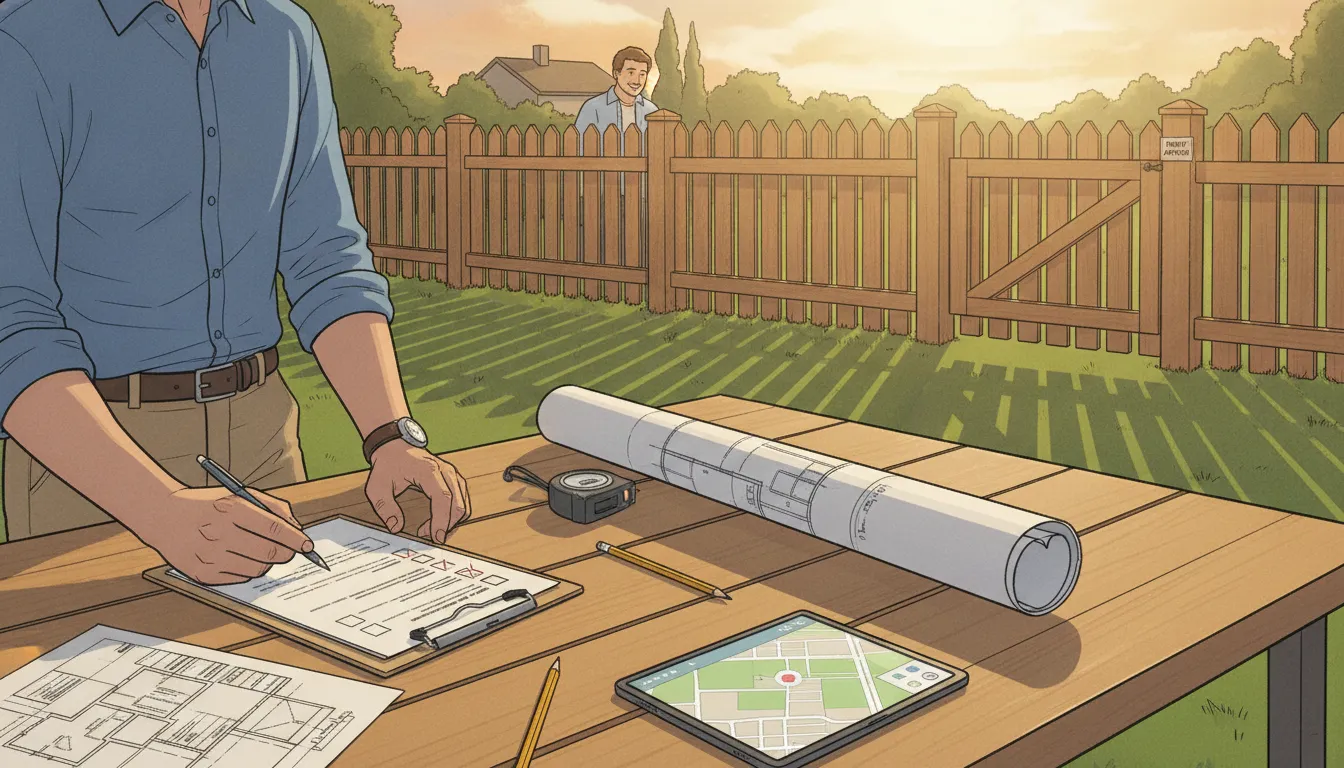
Fence permit checklist: what should your site plan show?
Use this checklist before submitting your application. It is not a substitute for local instructions. But it helps you gather the details that commonly decide whether a fence permit review moves quickly or comes back with questions.
| Checklist item | Why it matters |
|---|---|
| Fence route and gates. | Shows where each section, corner, and opening will sit. |
| Setbacks and easements. | Helps reviewers see possible placement limits before approval. |
| Structures and access points. | Clarifies how the fence relates to buildings, driveways, pools, and sidewalks. |
- Property address and applicant information.
- Proposed fence route from start to finish.
- Fence height, material, and total length.
- Gate locations and swing direction if requested.
- Existing house, garage, sheds, driveway, pool, and major site features.
- Setbacks from streets, sidewalks, structures, and property edges when required.
- Known easements, utility areas, drainage areas, and access paths.
- Corner lot sight-line areas, if applicable.
- HOA approval notes or architectural review requirements.
- Special conditions for pools, historic districts, floodplains, or commercial sites.
Fence line placement
The fence route is the main thing a reviewer needs to understand. Label the proposed line clearly and show how it relates to existing structures, driveways, sidewalks, streets, and yard areas. If the fence follows an existing fence line, say so, but still show the proposed route clearly.
Public records, GIS data, and satellite imagery can help prepare a practical site plan for many permit applications. If your project requires a legal boundary determination or field-marked corners, ask the local office what it requires before submitting.
Gates and openings
Gates affect access, safety, and traffic flow. Show each gate where it will sit along the fence route. If your permit office asks for gate width or swing direction, label those details. For pool barriers, confirm local gate and latch rules before applying.
Contractors should confirm gate placement with the owner before the permit is filed. A small gate change after submission can trigger a revision if the plan no longer matches the installation.
Setbacks and easements
Setbacks define how far a fence must sit from streets, structures, or other regulated features. Easements can reserve part of a property for access, utilities, drainage, or another use. A fence in the wrong place may need to be moved, even if the rest of the application is complete.
Check your deed, public parcel records, HOA documents, and permit office instructions for known easements. If a utility easement crosses the fence route, ask whether the fence is allowed and whether gates or removable panels are required.
How can a site plan help with fence permit approval?
A site plan turns a written fence description into a visual document. Instead of asking the reviewer to infer where the fence will go, the plan shows the route, gates, existing features, and relevant distances. That clarity can reduce back-and-forth when the permit office needs to confirm placement.
My Site Plan creates remote online site plans using available public records, GIS resources, satellite imagery, and customer-provided project details. The process is built for speed. You can order through the site plan services page, upload what you have, and receive a permit-ready plan in under 24 hours for most standard projects.
Why reviewers ask for a drawing
Fence applications often involve more than height and material. Reviewers may need to see whether the fence affects visibility near a street, crosses an easement. Blocks access, sits too close to a structure, or conflicts with an HOA layout. A drawing lets them review those issues faster than a written description alone.
The plan also gives contractors and owners a shared reference. If the permit is approved, the same plan can help guide the conversation before work starts. It is easier to catch a misplaced gate or unclear corner on paper than after posts are set.
Which My Site Plan option fits a fence project?
The right package depends on what the reviewer asks for. The Basic Plot Plan gives a simple property overview and can help with general planning, but permit applications often need more site detail. The Medium Site Plan is commonly useful for outdoor structure and HOA permitting needs. The Detailed Residential Site Plan adds more visible site features when the application asks for a fuller layout.
Commercial properties may need more information because the fence can affect access, parking, circulation, utilities, or tenant areas. For those projects, review The Works Commercial or the detailed commercial package before ordering.
How do you get a fence permit site plan online?
Ordering a fence permit site plan online is straightforward when you know what the permit office wants. My Site Plan does not require a site visit for standard projects. You provide the address, project notes, and any local checklist or marked-up details you already have. The drafting team prepares the plan and includes unlimited revisions if the office or HOA asks for changes.
- Check your local permit office's fence application instructions.
- Confirm whether the HOA, historic district, or other reviewer also needs approval.
- Choose the right My Site Plan package based on the requested level of detail.
- Upload the property address, fence route notes, gate locations, and any marked screenshots or documents.
- Review the completed plan and submit it with the permit application.
- Request a revision if the reviewer needs an adjustment.
Ready to prepare your fence permit package? Start with My Site Plan's permit-ready site plan service.
What to send with your order
Send the property address, planned fence location, approximate height, material, gate locations, and any local checklist. If you know the setback requirement, include it. If the fence must avoid a utility area, drainage area, or access easement, include that note too.
Marked screenshots are helpful. You can draw the proposed fence route over an aerial image, sketch gate locations, or label which side of the yard will be fenced. Clear notes help the team draft the first version closer to what the reviewer expects.
How pricing fits the project
My Site Plan uses transparent fixed pricing for standard packages. You can compare current options on the pricing page before ordering. Published residential options include a simple property overview, a medium plan for many permit and HOA needs, and a detailed residential plan for projects requiring more site detail.
Because local requirements vary, choose the package that matches the checklist rather than the cheapest option by default. If the office asks for structures, driveway, trees, measurements, and visible site features, a higher-detail package may prevent a second trip through review.
What causes fence permit delays?
Most fence permit delays come from missing or unclear information. The reviewer may not be able to tell where the fence sits, whether it crosses an easement. Whether the gate blocks access, or whether the height changes by yard location. Small omissions can create a revision cycle.
Unclear fence route
A vague note such as "new backyard fence" rarely gives enough information. Show the full route. Label the starting point, corners, gates, and ending point. If only one side of the yard is changing, make that clear so the reviewer does not assume a full replacement.
Missing setbacks or easement notes
Setback and easement questions can slow a review because they affect whether the fence can stay where proposed. If your local office asks for distances, show them. If an easement exists, note whether the fence avoids it or crosses it with permission from the relevant reviewer.
HOA and permit timing conflicts
Many owners wait for the city permit and then discover that the HOA still needs a separate submittal. Others receive HOA approval for a style but still need a city review for location or height. Confirm both timelines before ordering materials.
The best prevention is a complete package: local requirements checked, HOA instructions reviewed, project details gathered, and a clear site plan attached. That is exactly where My Site Plan's permit site plan service fits into the process.
What should contractors and property owners confirm before installation?
Approval is not the same as installation readiness. Before posts are set, the owner and installer should confirm that the approved plan, jobsite layout, and final fence order match. This is especially important when the project involves gates, corner lots, pools, or shared access areas.
Confirm the approved version
Use the latest approved plan, not an early draft or estimate sketch. If the permit office or HOA requested changes, make sure the installer sees the revised version. Keep the approved plan and permit documents available during installation in case an inspector asks for them.
Confirm field conditions
Walk the planned route before digging. Look for utility markers, drainage features, trees, slopes, walls, neighboring improvements, and access needs. If the route conflicts with a condition that was not shown in the application, pause and ask the permit office or HOA how to handle the change.
Confirm inspection steps
Some jurisdictions require an inspection before posts are set or concrete is poured. Miami-Dade County, for example, lists a post-hole foundation inspection for permitted non-masonry fences. Review the permit conditions so the installer does not cover work that must be checked first.
If your project later expands into a deck, pool, addition, or another exterior improvement, My Site Plan's broader site plan services can support future permit documentation too. Related permit education, such as the guide on building a deck without a permit, can also help owners understand why local approval matters before construction starts.
Frequently Asked Questions
Is a site plan required for a fence permit?
Many local authorities require a site plan with a fence permit application. The plan should show the proposed fence line, gates, nearby structures, setbacks, and known easements. Check your local application checklist because required details vary by jurisdiction.
Can I build a fence over an easement?
Building over an easement may be restricted because utility providers or other parties may need access. If placement is allowed, the owner may still have to move or remove the fence later. Confirm all recorded easements before choosing the fence line.
Does HOA approval replace a fence permit?
No. HOA approval and a local fence permit are separate requirements. An HOA may regulate fence materials, colors, styles, and placement, while the local authority enforces zoning, safety, and application rules. Obtain each required approval before ordering materials or starting construction.
Do fence posts need an inspection before installation?
Some jurisdictions require an inspection after post holes are prepared but before posts are set. This step lets an inspector review depth and placement before construction continues. Review the permit conditions before setting posts or pouring concrete.
Can a short fence still require a permit?
Yes. Permit thresholds depend on local rules, fence location, and special property conditions. A short fence may still need approval in a historic district, floodplain, corner sight area, or other regulated zone. Confirm requirements before installing any fence.
Ready to Start Your Fence Permit Site Plan?
My Site Plan helps you prepare a clear, permit-ready fence site plan online. Usually in under 24 hours, with unlimited revisions and a money-back guarantee if the plan is not accepted. If your permit office or HOA asks for a site plan, do not wait until the application is kicked back.

