


Getting a landscape permit protects your yard project from city zoning fines. Most homeowners do not realize that simple wall or tree changes often need city approval. Planning early saves time and money.
Get your landscape permit site plan online from My Site Plan.
A landscape permit is a legal document that most cities require before you start major yard work or site changes. You often need this permit for new walls, pools, or large trees that affect local zoning rules or street views. City offices use these permits to ensure your project meets safety codes and water use standards. To get one, you must submit a site plan that shows your property lines and all proposed changes. According to city plan guides, a site plan must show existing buildings and any new items to prove the project fits within the rules. While small home projects are often exempt, we provide professional plans with a 100% money-back guarantee to ensure your yard project stays legal and avoids fines.
Planning your yard remodel involves more than just picking out plants and stone. You must also check if your city requires a formal site plan for the work you have in mind. My Site Plan creates remote online site plans for permit applications without a required site visit. The first step is knowing when your project may need a landscape permit.
When does a yard project need a landscape permit?
Many homeowners wonder if they need a permit for yard work. Small tasks like planting flowers or adding mulch usually do not need any forms. But bigger changes often do. A landscape permit helps your city make sure that your project is safe and follows local rules. Most building offices want to see a plan before you start a large project. This plan shows how your work fits on your land.
A landscape permit is a way for the city to track changes to the land. It helps keep the area safe and looking good. If you skip this step, you might face fines or have to stop your work. It is always best to check with your local office before you buy tools or hire a crew. Knowing the rules early will save you time and money.
New construction and major additions
When you build a new home or add a large room, you often need a landscape permit. Cities want to see how your project fits with the street. This includes where you put trees and how you follow zoning and streetscape rules. You will need to show where new plants will go and how they affect the view from the road. Most offices need these plans for any big change.
Your plan must include clear facts to be approved by the city. You should show your property lines and any buildings that will stay or be built. It must also show where people and cars will move on the land. Detailed plans help the city staff see if your project meets all codes. You can get site plans for permits from My Site Plan to help meet these rules quickly.
Projects that change the shape of the land or add many new structures will likely need a permit. This makes sure that the work does not cause water issues for your neighbors. If you are a contractor or a landscaper, having a clear plan ready can speed up the process. Our team uses satellite data to create these plans fast. This remote process is easy and keeps your project on track.
Small projects and common exemptions
Not every yard project needs a permit from the city. Many towns do not require landscape plans for simple home projects. This often applies to single-family homes or small buildings with four units or fewer. If you are just adding a small garden bed or a new walkway, you might be in the clear. Small changes usually do not affect the public view or the land much.
But you should always check with your local building office first. Even small projects can trigger a permit if they are near a property line. If you are building a fence or a deck, the rules might change. Having a professional landscape site plan helps you stay safe. It shows the city exactly where your project will sit on your land. This can prevent legal issues with neighbors later.
Even if the city does not need a permit, your HOA might. Many home groups have strict rules about how yards should look. They often want to see a plan before you change your landscape. Our site plans are guaranteed to be approved by both city offices and HOAs. This gives you peace of mind as you start your yard work. We offer unlimited revisions to make sure you get exactly what you need.
Zoning and tree protection rules
Some permits are needed to protect the land or the look of the neighborhood. Projects near sensitive areas like wetlands often have strict rules. A landscape permit helps show that your project will not hurt the local land. It may also help buffer your project from other homes. This keeps the visual look of the city in good shape for everyone.
Cities also care about the trees that are already on your land. You must often show any existing trees on your plan. You need to list their size and where they are located. This helps the city make sure that you protect the trees during your work. Keeping old trees is a key part of many local zoning codes.
My Site Plan uses GIS and satellite data to create these plans remotely. This process is fast and saves you from paying for an on-site visit. Our team is based in the U.S. and is veteran-owned. We provide plans that are ready for the permit office in less than 24 hours. This helps you get your yard project started without long wait times. If your permit office does not accept the plan, we offer a full money-back guarantee.
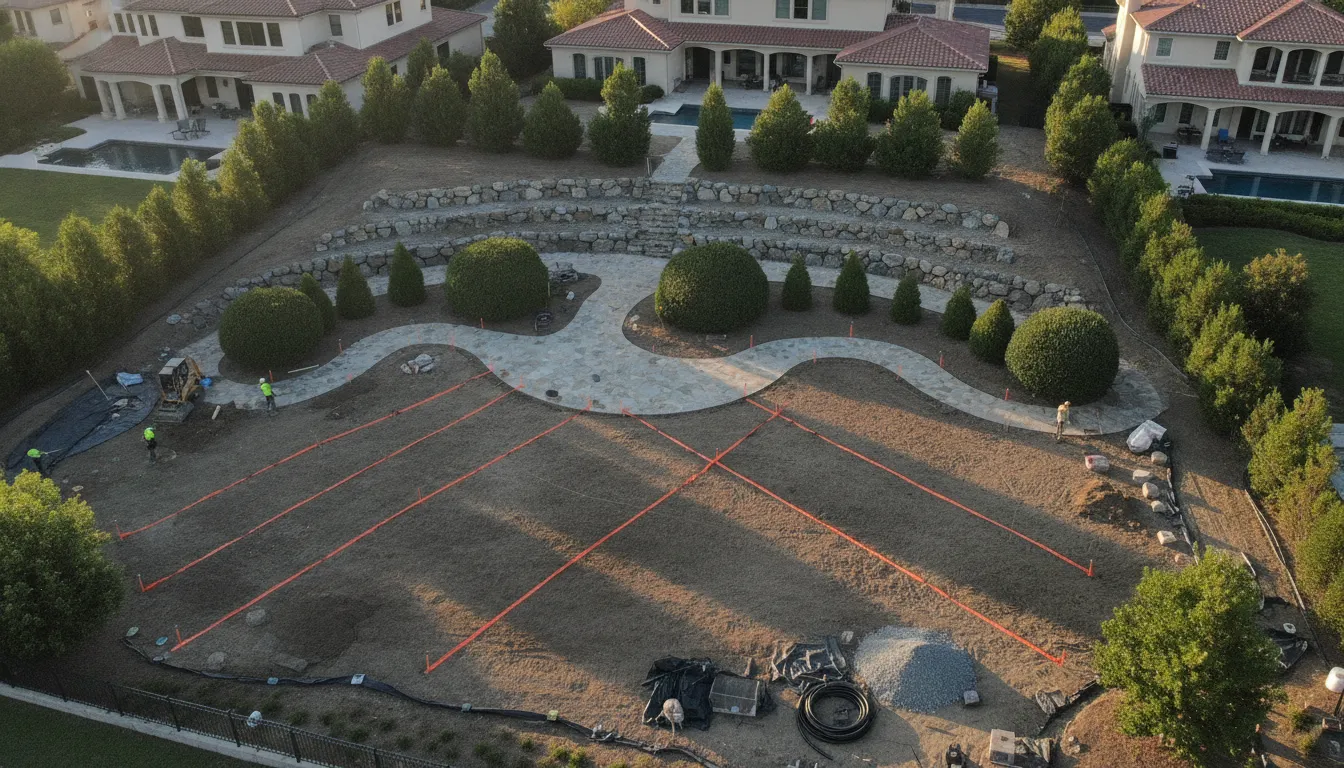
What should a landscape permit plan show?
My Site Plan prepares remote online site plans that clearly organize the visible details a local reviewer may request. A professional landscape site plan is more than just a drawing of your yard. It is a tool that helps local offices see how your project fits the land. Most cities require a get a site plan for your landscape permit for new builds or large yard changes. This plan must show how you will follow zoning and street rules. It helps reviewers check for street trees and on-site plant areas to keep the neighborhood looking good.
Visible yard and land features
Your plan should start with a clear look at your property lines. Reviewers need to see the exact boundaries of your land to check for setbacks. You must mark all structures that will stay and any new ones you want to build. This includes your house, sheds, and decks. Plans also show pedestrian and vehicular circulation like paths, driveways, and parking areas. These details help show how people and cars will move through the space safely.
You also need to show the items that shape the land. Mark all walls and fences on the plan. If you are adding a pool or a large patio, these are key parts of the layout. The city uses this data to ensure you are not building too close to the edge of your lot. Showing these features early can help you get a professional landscape site plan approved with fewer delays.
Trees and plant groups
The trees on your land often have their own set of rules. You must show the location and size of all significant trees that you plan to keep. This includes the trunk diameter and the drip line for each tree. The drip line shows how far the roots spread under the ground. Cities check this to make sure you do not harm old trees during your project. Protecting these trees helps keep the local visual character strong.
For your new plants, you can group them into masses on a rough plan. This makes it easier for staff to review your goals early in the process. You will need a plant legend that lists the botanical names for each species. This list helps the city know exactly what you are planting. It also helps show if your yard will be water-efficient by marking different hydrozones. These notes prove that your site plan pricing are met.
Drainage and soil notes
A good plan shows how water moves across your lot. You should note how you will handle run-off from roofs and hard surfaces. This keeps water from pooling or flowing onto your neighbor's land. High-quality plans often include notes on slope and soil to show that the land can handle the new work. These drainage notes are a key part of the permit process for any big yard project.
Finally, make sure your plan uses the right scale. Many cities want a scale between 1 inch equals 20 feet and 1 inch equals 40 feet. This makes the plan easy to read and check. If your project is on a lot larger than one acre, you may need extra help from a pro. But for most residential yards, a clear site plan is enough to start your landscape permit application. Having all these facts in one place makes the review go much faster.
Landscape permit preparation checklist
My Site Plan can turn the property details you provide into a permit-ready plan, with unlimited revisions and guaranteed acceptance by building departments and HOAs where applicable. Getting a landscape permit does not have to be hard. You just need to be ready. Being ready means having the right facts and maps for your land. This helps you avoid long wait times. It also keeps your project on track. Most cities want to see how your new yard will look. They also want to see how it affects the space around it. You can get a site plan for your landscape permit to speed up this process.
Collect your property details
Before you start your permit work, you must know your land. Find your property lines first. You should also look for any big trees or walls that are already there. City rules often say you must show these on your map. For example, you may need to show the size of any existing significant trees that you want to keep. This helps the city know you are keeping the local plants safe. It is much easier to gather this info now than to do it later.
You also need to think about how water moves on your land. Some cities want to see how you will use water for your new plants. They may ask for a plan that shows water-saving tools. If you have a large lot, you might need more detail. Smaller homes may have simpler rules. But it is always best to have all your facts ready. This keeps the permit office from asking for more facts later on.
Essential submittal steps
A good plan shows that you have done your homework. It proves that your project fits with local zoning laws. You will need to turn in several items at once. This usually includes a permit form, a fee, and a detailed map of your lot. Most people find it helpful to follow a set list. This makes sure nothing gets left out. Here are the steps you should take to get ready for your landscape permit.
- Check your local zoning codes. Call your city office to see if you need a permit. Some small projects do not need one. But most big changes like new pools or walls do.
- Mark all current structures. Look at your house, shed, and fence. You must show where they sit on the land. This helps the city see how much space is left for plants.
- Draw your new landscape ideas. Show where you want to put new trees, shrubs, or patios. Make sure you leave enough room between your project and the property line.
- Talk to your HOA. Homeowners associations often have their own sets of rules. They may care more about how things look than the city does. Get their okay before you move forward.
- Order a professional site plan. A clear map is the most needed part of your submittal. It ties all your facts together in a way that the city can easily read.
Local city and HOA rules
You may need to please two different groups. The city looks at safety and land use rules. They check to see if your project follows the law. They want to know about things like water runoff and plant height. But your HOA looks at how the project fits the look of the area. They may have a list of plants that you must use. Or they might tell you which colors are okay for a new fence.
It is smart to check with both groups at the same time. This saves you from having to change your plan twice. Some people think an HOA's okay is the same as a city permit. This is not true. You must have both if both groups have rules for your area. If you follow this checklist, you will be in good shape for both reviews. Being ready is the best way to get your project started fast.
Choosing the right level of detail for your plan
My Site Plan offers different plan-detail levels so you can match the order to your project and the reviewer's stated requirements. When you apply for a landscape permit, the level of detail on your site plan can make or break your approval. Most projects fall into two groups. Simple jobs like a new fence or a small shed often only need a basic map. More complex work, such as adding a pool or a large deck, usually needs a more detailed view. To get a site plan for your landscape permit, you must first know what your local building office asks for.
Basic versus detailed plans
A basic plot plan shows the main parts of your land. It includes your property lines, your house, and other large items like a garage. This is often enough for small changes that do not shift the footprint of your land much. But for a professional landscape site plan, you may need to show much more. A detailed plan adds things like trees, paths, and walls. It helps city staff see how your new project fits with what is already there.
Detailed plans are helpful when you have a lot of items to fit into a small space. They help you avoid building over utility lines or crossing onto a neighbor's lot. If your project affects a large area, your city might have strict rules about what to show. For example, some cities need you to show the drip line of existing trees to keep them safe during construction. Using a high level of detail early on can stop delays in the permit process.
What to include for complex projects
For a landscape permit, a complex project often needs to show more than just the new plants or patio. You might need to list the names of all the plants and where they go. Some cities even want to see how you will water them. A detailed plan makes it clear to the reviewer that you have a full plan that meets all local codes. This is very important if you are working near a street or a public space where the city has streetscape requirements for new trees.
Choosing the right plan tier ensures you do not pay for more than you need, but you still get your permit. The table below shows the common parts of each plan type to help you choose the best fit for your job.
| Plan Feature | Basic Plot Plan | Detailed Site Plan |
|---|---|---|
| Property Lines | Included | Included |
| Main Structures | Included | Included |
| Existing Trees | Not Included | Included |
| Walkways & Paths | Not Included | Included |
| Swimming Pools | Not Included | Included |
| Retaining Walls | Optional | Included |
Permit needs for landscape design
The permitting requirements for your landscape design will vary by where you live. Some towns have very few rules for small homes. Others might check every plant to make sure it is not a type that uses too much water. Most of the time, the more work you do, the more detail you need to show. If your project covers a big area or touches a sensitive spot, a detailed plan is usually the safe choice. It shows the city that you are following their rules and keeping the neighborhood looking good.
How an online site plan can keep the permit moving
My Site Plan provides a convenient remote process and a 24-hour turnaround for permit-ready plans. Getting a permit for yard work can take time. Many people wait weeks to get the right drawings. But an online site plan can speed up the whole process. You can skip the site visit and get an expert plan from your home. This helps you get your landscape permit faster and starts your project sooner. You save time and money by using a remote workflow that fits your needs.
This path is perfect for busy people. You do not have to wait for a pro to show up at your house. You just share your project facts and let the experts do the rest. This simple method takes the stress out of permit papers. It gives you a clear road to start your outdoor build.
Fast data order process
The first step is to share your project facts. You do not need to meet anyone at your house. Instead, you just upload your info and any sketches you have. This simple start keeps your project on track and saves you a lot of effort. It is a quick way to get your project moving without any delay.
Most cities have clear rules for what to show on your plan. As one way, a landscape plan must show lot lines and structures. When you get a site plan for your landscape permit, you ensure these parts are in the right spot. This helps you avoid errors. You can choose a Basic or full plan based on what your city wants.
Getting this data takes only a few minutes. You can use old plot plans or even photos of your yard. Once you hit send, the team takes over. This veteran-owned service knows just what permit offices look for in every state. They turn your ideas into a plan that works.
Rapid drafting with map tools
Once you order, the work starts right away. Pros use GIS and map tools to see your land from above. They can find the lines of your lot and where your house sits. These tools are very exact and work for any yard project. This saves you from the high cost of site visits and long wait times.
You will often get your draft in under 24 hours. A fast professional landscape site plan lets you file your papers the next day. You will not have to put your work on hold for weeks just for one drawing. The team uses high-end maps to make sure every tree and wall is in the right place.
Using maps means the work is done in the U.S. by experts who know local codes. They can spot things like setbacks that you might miss. This expert eye keeps your plan from being sent back. It is a smart way to get your yard project done on time.
Changes and the permit promise
Sometimes the city wants a small change. Maybe they need a buffer shown or a new tree added to the map. An online service makes these edits easy to handle. You get limitless changes to make sure the plan fits what your local office needs. You can just send a quick note and get the updated file back fast. This means you stay in control of the project without extra fees.
- Fast edits within one day for most changes.
- Expert advice on how to meet city checklists.
- Full support until your plan gets the green light.
This support is vital for reaching the finish line. If the permit office still says no, you are safe. You can rely on a 100% money-back promise. This path is safe, fast, and built to help you get your project done. Instead, you can focus on building your new deck or pool while the permit moves through the city office.
Frequently Asked Questions
When is a landscape permit required for yard work?
Cities often need a landscape permit for big yard tasks. This includes new builds, large decks, or pool projects. Jobs that change how water moves or add tall walls often need a permit. Small tasks like planting flowers usually do not. You should check with your local building office to be sure. They can tell you if your yard project needs a permit. A site plan for permits helps show the city that your work will follow all local rules.
What must a landscape permit site plan include?
A landscape permit site plan must show your property lines and all current buildings. You must also show the new things you want to build. This includes walls, paths, and new plant areas. Many cities need to see a plant list with the names of all trees and shrubs. As noted by the city of Bellevue, plans must also show how the design helps block the project from other areas. This helps make sure the yard project fits well with nearby homes.
Do I need a licensed expert for a landscape permit?
Most small yard projects do not need a licensed expert. You can often use a drafting service to get a plan for your permit. Some very large projects might have more rules. For example, some cities have extra needs if the site is over one acre. As stated in Bellevue codes, these larger sites might need help from a local plant expert. For most home projects, our fast and remote drafting service is all you need to get your work started.
How are existing trees handled in a landscape permit?
Yes, many cities have strict rules about saving existing trees. Your site plan must show the spot and size of all major trees on your land. You also need to show the drip line for each tree to keep them safe. As noted by the City of Bellevue, you must clearly mark all trees that you plan to keep. This helps the city see that your landscape project will not harm the local land or mature tree tops.
Ready to Get Your Landscape Permit Approved?
My Site Plan makes it easy to order a remote online site plan with 24-hour turnaround, unlimited revisions, guaranteed acceptance where applicable, and a 100% money-back guarantee. Waiting to apply for your permit or using a poor site plan can halt your yard project for weeks. You do not want to wait months for an approval when our team can create a permit-ready plan using satellite data in one day. This speed ensures your local office has what they need for a quick review to keep you on schedule.
By acting now, you get a 24-hour turnaround and avoid the stress of a rejected filing that could push your project into next season. We take the work out of permit needs by giving you a professional landscape site plan that meets town rules without a site visit. This allows you to start digging sooner and enjoy your new yard while the weather is still perfect for landscaping.
Ready to book? Call 310.339.8588 to order your site plan online and start your project today.

